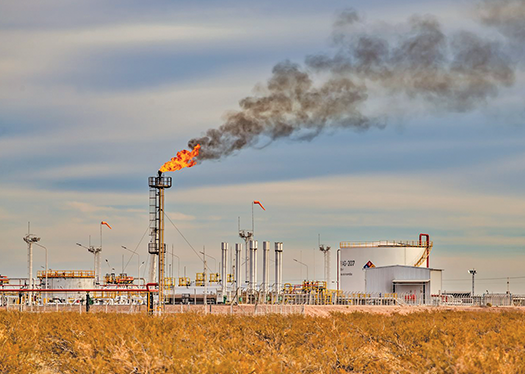
Shale oil and gas output in Argentina’s Vaca Muerta fields is on the rise. (Photo by Martín Alvarez Mullally/Opsur)
Since 2011, the Argentine public has gotten used to the idea their country could become a major exporter of fossil fuels. The notion began taking shape when the U.S. Energy Information Administration (EIA) that year classified the country’s Vaca Muerta geological formation—spanning 30,000 square kilometers (11,600 sq. miles) beneath Neuquén and three other provinces—as one of the world’s largest deposits of unconventional oil and gas. The potential glimpsed in 2011 is becoming reality today, with Argentina’s oil production hitting historic highs and its gas output poised for significant gains. Last July, Argentina extracted 916,200 barrels of oil per day, some 70% of it coming from the fast-multiplying fracking operations tapping Vaca Muerta’s shale formation. The previous record of 828,000 barrels per day was set in 1998. Subsequent depletion of conventional fields reduced production, making Argentina a net oil importer—a situation reversed in 2024. The only obstacle... [Log in to read more]